New Roof Installation in Peterhead & Aberdeenshire
Full re-roofing as a standalone job, or sequenced ahead of a solar panel installation if your existing roof won't see the panels out.
When a Full Re-Roof Makes More Sense Than a Repair
A re-roof is the right call when damage is widespread rather than isolated, when the sarking board underneath is failing, or when a roof's simply reaching the end of its service life — slate and tile roofs typically last 50-80 years depending on exposure, but the felt and battens underneath usually need replacing sooner. If patch repairs would only buy a year or two before the next leak, we'll say so rather than stringing out repairs on a roof that needs stripping back to the rafters. We strip the old covering back to the rafters, dispose of the waste, and inspect timber condition before anything new goes on. Like our repair work, this is a standalone service — most re-roofs we do have nothing to do with solar.
Roofing Materials and Options
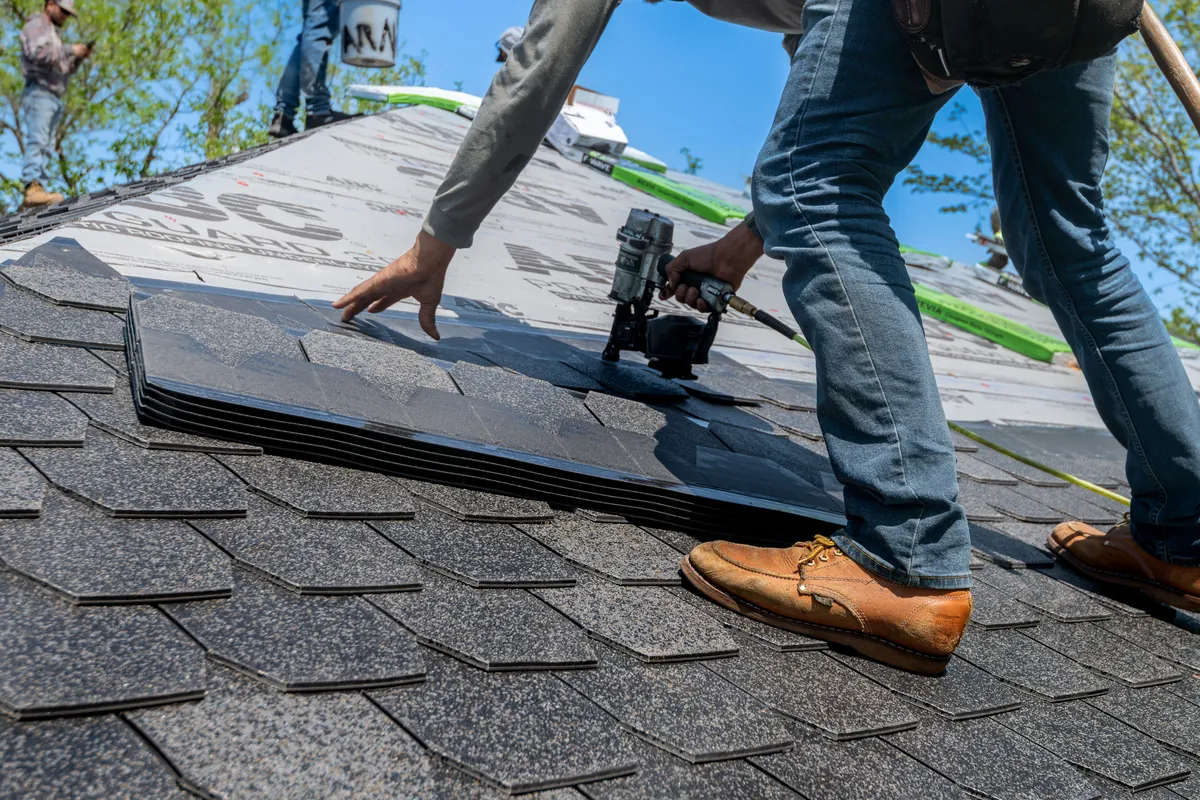
Slate remains the standard for older Aberdeenshire properties and matches the existing streetscape in most towns, though reclaimed or new Scottish slate costs more than concrete or clay tile alternatives. Concrete interlocking tiles are cheaper and faster to lay, and hold up well against coastal weather when properly fixed. Whatever the covering, we always replace the underlay felt and battens as part of a full re-roof rather than reusing old timber, since that's the layer that actually keeps water out if a tile or slate slips. Flashing around chimneys and roof junctions gets renewed too, in lead or a modern flashing system depending on what suits the property.
- Natural slate — traditional look, longest lifespan, higher cost
- Concrete tile — faster to lay, cost-effective, coastal-durable
- New felt, battens and flashing included on every re-roof
Sequencing a Re-Roof Before Solar
If you're planning solar and your existing roof won't see out the panels' working life, it makes more sense to re-roof first than to fit panels now and remove them again in ten or fifteen years. We can quote both jobs together and sequence them back to back — re-roof, then straight into solar panel installation — so scaffolding and access only get set up once. This suits farms and larger roofs too, where a full re-roof ahead of a commercial or agricultural solar install avoids paying for scaffolding twice. If your roof just needs isolated repairs rather than a full strip, our roof repairs and preparation service is the better fit. We try to schedule full re-roofs outside the worst of the winter weather where the job allows, though smaller repair sections can go ahead year-round.
Frequently Asked Questions
How do I know if I need a re-roof rather than a repair?
Widespread damage, failing sarking board, or a roof covering near the end of its life all point to a re-roof. We assess this honestly at survey and won't recommend a full re-roof if repairs would do the job.
How long does a full re-roof take?
Most domestic re-roofs take one to two weeks depending on size, roof complexity and weather. Larger farm or commercial roofs take longer, and we'll give a job-specific timeframe with your quote.
Should I re-roof before or after fitting solar panels?
Before, if the existing roof won't outlast the panels. Re-roofing first avoids paying for scaffolding twice and means the panels never need to come off for roof work.
Ready to Get Started?
Book a free, no-obligation survey and quote for your re-roof.