Residential Solar PV Installation for Aberdeenshire Homes
Home solar systems sized to your roof, your household electricity use and how your family actually lives — not a one-size package.
Sizing a System Around Your Roof and Your Household
A residential install starts with what your household actually uses, not a generic package. We look at roof size, orientation and shading, then at your electricity habits — how many people are home during the day, whether you run an EV charger or heat pump, and what your current bill looks like. That's what decides whether a 3kW, 4kW or larger system suits you. Oversizing a system for a small roof or a low household usage rarely pays back sensibly, so we'll say if a smaller array is the right call rather than quoting the biggest system your roof could physically hold.
- Free on-site survey of your roof, meter and consumer unit
- Written quote covering panel count, output and mounting method
- Registration with your electricity network operator after fitting
- A clear handover on your app or in-home display
Aberdeenshire House Types We Work With
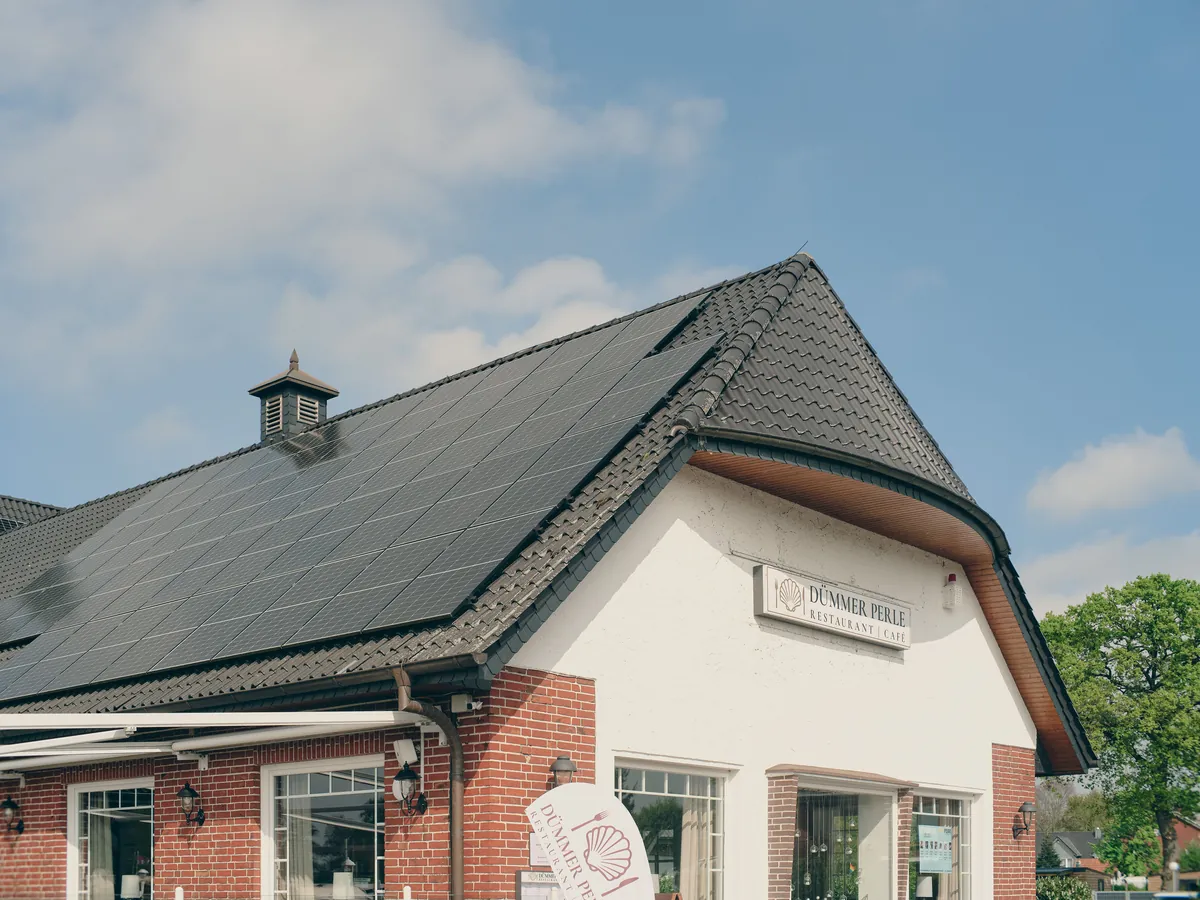
Housing stock across Peterhead and the wider area varies, and roof type changes how we mount panels. Granite and sandstone terraces in town centres often have slate roofs with narrower rafters and chimneys or dormers eating into usable space — mounting is straightforward but the panel layout needs more planning around obstacles. 1960s-80s estate housing typically has simple pitched tile or slate roofs with clear south or south-west-facing slopes, usually the most straightforward installs we do. Newer new-build estates tend to have fewer roof obstructions, though trussed roof structures can limit where we route cable internally, so we check that at survey. Some coastal properties carry pantile roofs rather than slate, which take panels fine but need a slightly different flashing detail around the ridge.
Battery Storage and What to Expect Day-to-Day
Most households are out at work or school through the middle of the day and home in the evening once generation has dropped off, so a lot of homeowners pair panels with a battery. It stores what you generate at midday and releases it that evening instead of you buying power back from the grid. We fit both together or add a battery to a system you already have. Day-to-day, there's no real maintenance beyond keeping panels clear of overhanging branches and checking the app occasionally. Output follows the seasons too — higher from March through September, lower in December and January — which is worth knowing so a quiet midwinter reading doesn't seem alarming. If your roof needs attention before panels go up, that's covered under our roof repairs and preparation service.
Frequently Asked Questions
How much of my roof will panels actually cover?
It depends on your usage and roof size, not a fixed rule. Most homes need somewhere between 10 and 20 panels; we confirm the exact number and layout during your free survey.
Will panels suit an older granite or sandstone roof?
In most cases yes, though older slate sometimes needs individual slates checked or replaced first. We assess roof condition as part of the survey and flag any repair work before quoting the install.
Do I need a battery, or can I add one later?
Not required — plenty of homes run panels alone. A battery can be fitted at the same time as your panels or added later without redoing the installation.
Ready to Get Started?
Book a free, no-obligation survey and quote for your home.